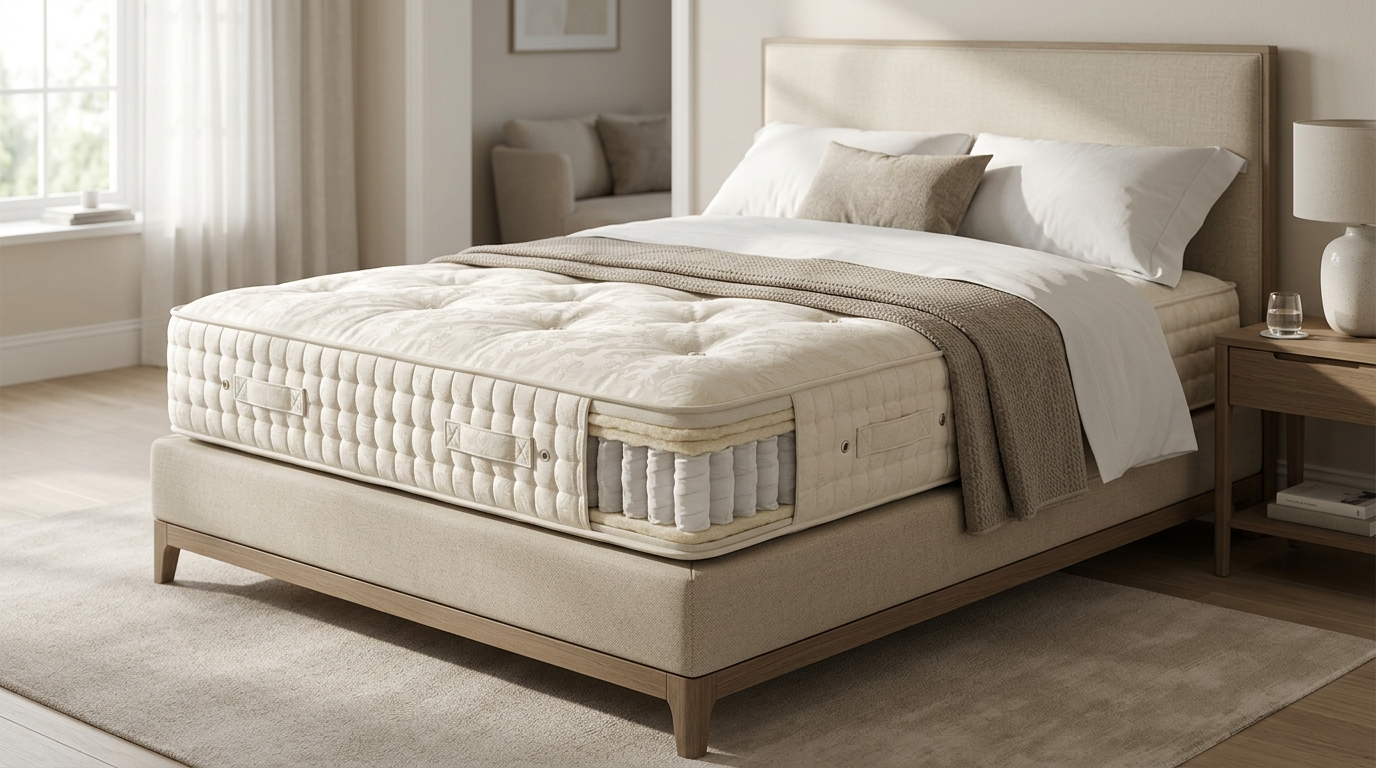
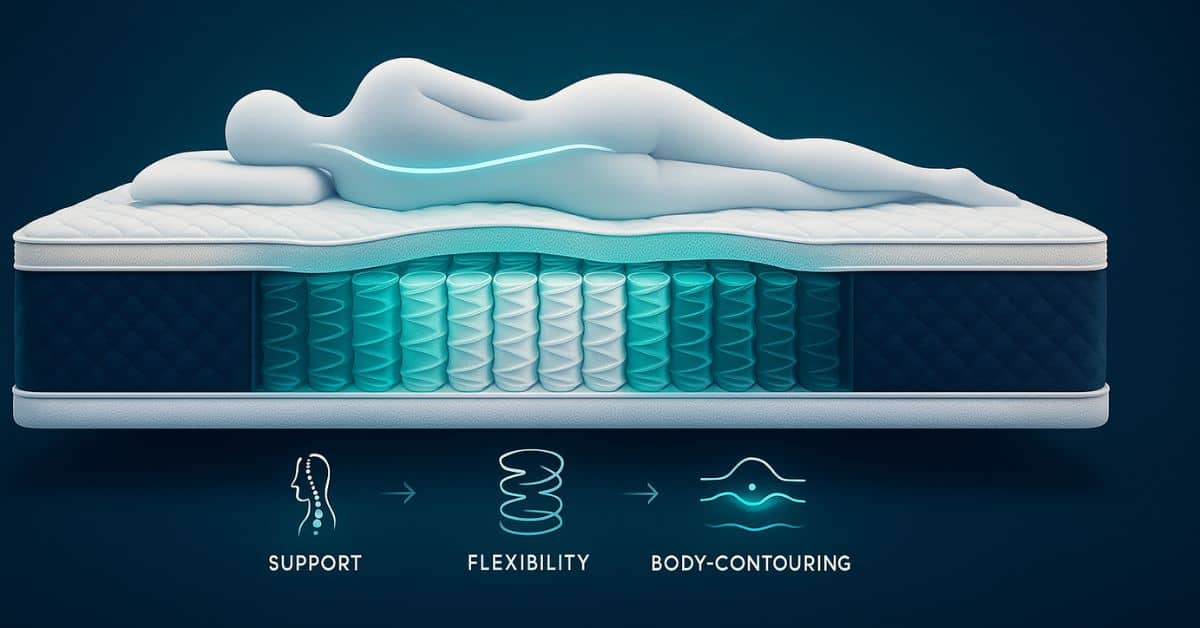
I still remember the morning I woke up with a dull ache in my lower back after spending serious money on what I thought was a high quality sprung mattress. The salesperson had talked endlessly about spring count, the showroom felt luxurious, and the price tag screamed premium. Six months later the middle had started to dip. That expensive lesson taught me what most buyers only discover too late: price and marketing rarely equal real build quality. If you want a mattress that actually supports your body, regulates temperature, and holds up for a decade or more, you need to look past the hype and understand construction, materials, and how the mattress matches your sleep style.
Key Takeaways
- Coil gauge often matters more than raw spring count for long-term support and durability.
- Body weight and sleeping position should drive your choice more than brand name or showroom feel.
- Premium natural materials and proper edge reinforcement separate mattresses that last 10–15 years from those that sag in three.
- Certifications like OEKO-TEX and CertiPUR-US give real safety and quality signals, not just marketing logos.
- A proper trial period, rotation schedule, and the right bed base can double the usable life of a high quality sprung mattress.
Table of Contents
- What Exactly Is a High Quality Sprung Mattress?
- In My Experience, Most People Buy the Wrong Mattress for the Wrong Reason
- Understanding Every Spring System Before Spending Your Money
- What Most People Get Wrong About Mattress Construction
- Honestly, I Made This Mistake Too—Ignoring the Materials
- Which Mattress Is Best for Your Sleeping Position?
- This Is Where Things Get Real—Understanding Comfort & Support
- I've Seen This Happen Many Times—Why Mattresses Start Sagging Early
- Coil Count vs Coil Gauge—Which Actually Matters?
- Pocket Sprung vs Memory Foam vs Hybrid
- Luxury vs Budget Sprung Mattresses
- Most People Ignore This Part—Mattress Certifications That Actually Matter
- Step-by-Step: How to Choose the Right High Quality Sprung Mattress
- Comparison Table—Premium Spring Systems
- Pros and Cons of High Quality Sprung Mattresses
- Real-Life Buying Scenarios
- Beginner Mistakes to Avoid
- How to Make Your Mattress Last 10–15 Years
- AI Tools That Can Help You Choose the Right Mattress
- Mobile Apps Worth Using Before Buying
- Decision Framework—Which Mattress Fits You Best?
- Frequently Asked Questions
What Exactly Is a High Quality Sprung Mattress?
Quick Definition
A high quality sprung mattress uses carefully engineered steel coils as its support core, combined with dense comfort layers and durable upholstery. True quality shows in coil gauge, hand or precision assembly, natural breathable materials, reinforced edges, and consistent support that maintains spinal alignment for years rather than months.
Why This Matters Before Buying
Most buyers confuse expensive with high quality. I’ve watched people spend £1,500 on a mattress that looked plush in the shop yet developed a noticeable dip within eighteen months. Build quality—coil thickness, material density, and construction method—determines whether you get lasting comfort or expensive disappointment.
At a Glance
- Who should buy one: people who want responsive support, good airflow, and a traditional bounce.
- Who shouldn’t: those needing extreme pressure relief without any bounce or very tight budgets under £300 for a double.
- Average lifespan: 8–15 years depending on construction and care.
- Typical price range: £500–£3,000+ for genuine quality.
- Best sleeping positions: works well across side, back, and combination sleepers when firmness is matched correctly.
In My Experience, Most People Buy the Wrong Mattress for the Wrong Reason
After years of testing and talking to owners, the same mistakes keep appearing.
Buying Based Only on Spring Count
A 2,000-spring mattress with thin 16-gauge coils often feels less supportive than a 1,000-spring model using thicker 13-gauge steel. Gauge thickness determines how long the springs resist compression. I’ve seen lower-count, heavier-gauge mattresses still feel firm after a decade while high-count thin coils flattened early.
Choosing Price Instead of Construction
Budget mattresses frequently hide soft foam and weak edges under attractive covers. Premium construction uses denser foams, natural fibres, and reinforced borders that justify the higher cost over time.
Ignoring Sleeping Position
Side sleepers need more pressure relief at shoulders and hips. Stomach sleepers need firmer support to keep the spine neutral. Buying without matching position is one of the quickest ways to create morning stiffness.
Forgetting Body Weight
A lightweight person can sink too deeply into a soft mattress designed for heavier users. Heavy sleepers compress lighter coils faster. Weight matching is as important as position.
Assuming Every Pocket Sprung Mattress Is Premium
Pocket springs vary widely. Some use thin wire and sparse filling. Others feature individually wrapped heavy-gauge coils, zoned support, and multiple natural layers. The label alone tells you almost nothing.

Understanding Every Spring System Before Spending Your Money
Pocket Sprung Mattress
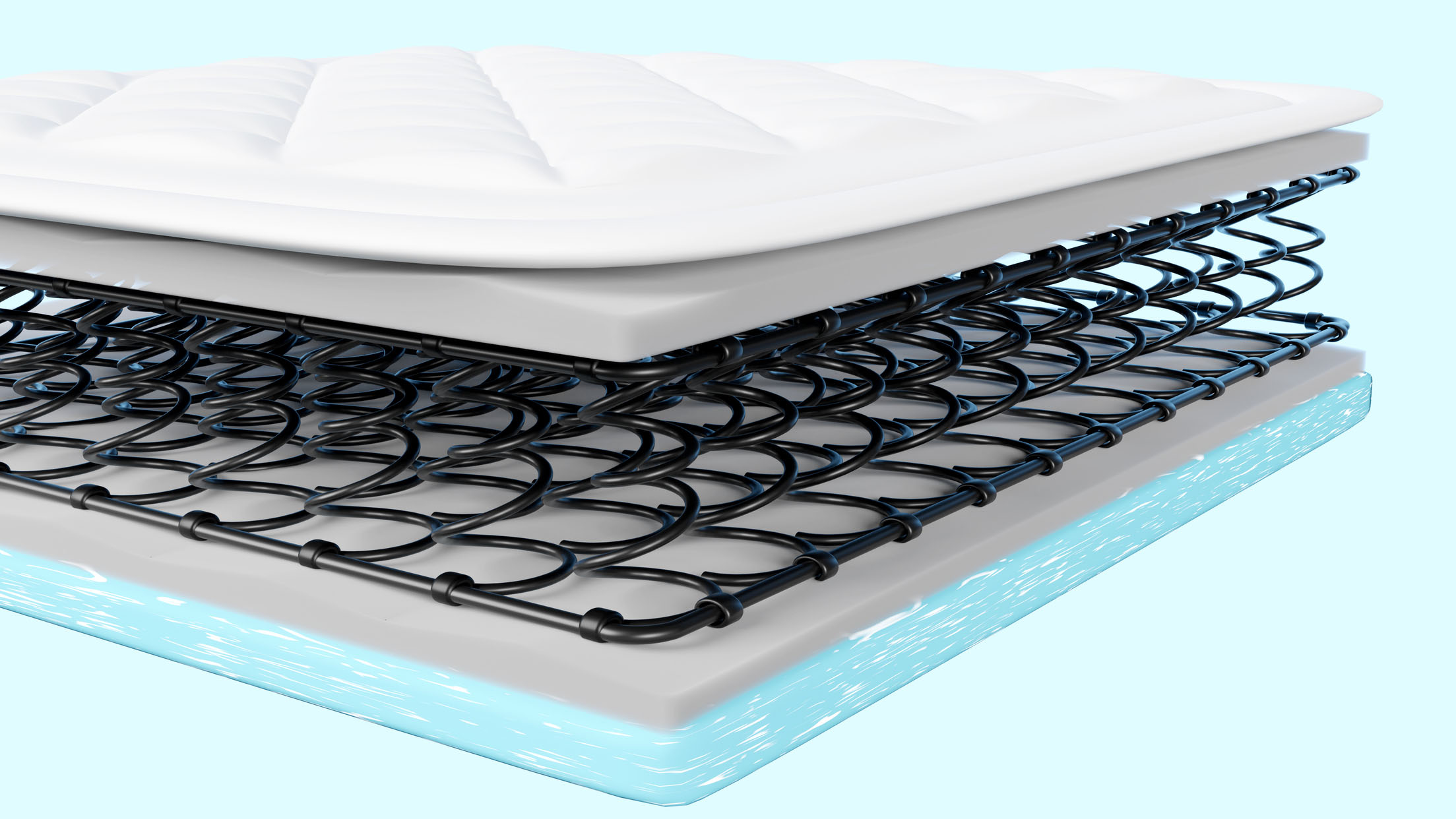
Individually wrapped coils move independently. Advantages include excellent motion isolation and contouring. Disadvantages are higher cost and potential for softer feel if gauge is thin. Best for couples and side sleepers. Lifespan 10–15 years in quality models. Price £600–£2,500+.
Open Coil (Bonnell)
Connected hourglass coils. Cheap and responsive but poorer motion isolation and edge support. Best for guest rooms or temporary use. Lifespan 5–8 years. Price usually under £500.
Continuous Coil
One long wire forms multiple coils. Durable and inexpensive yet limited contouring. Suitable for basic needs. Lifespan around 6–9 years.
Offset Coil
Modified Bonnell design with hinged connections for better contouring. Good middle-ground support. Less common in pure form today.
Micro Pocket Springs
Tiny coils layered above larger ones for surface comfort. Add pressure relief without thick foam. Best in hybrids for side sleepers.
Hybrid Sprung Mattress
Pocket springs plus substantial foam or latex layers. Combines bounce with contouring. Excellent for most sleepers. Lifespan 8–12 years. Price £700–£2,000.
What Most People Get Wrong About Mattress Construction
Support Core
The spring unit is the foundation. Gauge, count, and zoning decide long-term support.
Comfort Layers
These determine the initial feel. High-density latex or wool outperforms cheap soft foam that breaks down quickly.
Upholstery Materials
- Wool: excellent temperature regulation and moisture wicking.
- Cotton: breathable and soft.
- Latex: responsive and durable.
- Memory Foam: pressure-relieving but can sleep warm.
- Cashmere and silk: luxury temperature control.
- Bamboo: soft and moisture-absorbing.
Edge Reinforcement
Strong borders prevent that “rolling off” feeling and extend usable surface area.
Hand Tufting vs Machine Quilting
Hand tufting locks layers firmly and reduces shifting. Machine quilting is faster and cheaper but less stable over years.
Airflow Design
Open coil structures and natural fibres keep heat moving away from the body better than solid foam cores.
Honestly, I Made This Mistake Too—Ignoring the Materials
Materials decide durability, temperature regulation, pressure relief, breathability, motion isolation, and overall comfort. I once chose a mattress with synthetic fill because it felt soft in the store. Within two years it retained heat and developed soft spots. Premium wool and latex layers stayed cooler and more supportive for far longer. Budget polyester fills compress and trap moisture; high-quality natural fibres do the opposite.
Which Mattress Is Best for Your Sleeping Position?
Side Sleepers
Medium to medium-soft pocket sprung or hybrid with good shoulder and hip cushioning.
Back Sleepers
Medium-firm support that keeps the lower back filled without excessive sink.
Stomach Sleepers
Firmer models that prevent the hips from dropping too low.
Combination Sleepers
Responsive hybrids that allow easy movement.
Heavy Sleepers
Thicker gauge coils and higher density comfort layers.
Lightweight Sleepers
Softer surfaces so they can still achieve proper contouring.
Couples
Strong motion isolation from pocket springs. Also read: Best Sprung Mattress for Couples (2026): Sleep Better Together Without Motion Transfer, Back Pain, or Overheating
Elderly Users
Medium firmness with easy edge support for getting in and out of bed.
Teenagers
Durable medium-firm models that can handle growth and activity.
This Is Where Things Get Real—Understanding Comfort & Support
Firmness Levels Explained
Most scales run 1–10. Side sleepers often prefer 4–6, back sleepers 5–7, stomach sleepers 6–8.
Pressure Relief
Critical for shoulders and hips. Soft comfort layers over supportive coils work best.
Motion Isolation
Pocket springs excel here. Open coils transfer more movement.
Edge Support
Look for reinforced borders if you sit on the edge or share the bed.
Zoned Support
Different coil tensions under lumbar, shoulders, and hips improve alignment.
Spinal Alignment
The mattress should keep your spine in a neutral line whether you sleep on your side or back.
Bounce vs Body Contouring
Sprung mattresses offer more bounce and easier movement than pure foam.
I've Seen This Happen Many Times—Why Mattresses Start Sagging Early
Coil fatigue from thin gauge wire, foam breakdown in low-density layers, poor edge support, the wrong bed base (especially old sprung bases under new mattresses), moisture damage from lack of a protector, and cheap comfort layers all accelerate sagging. Prevention is straightforward: choose proper gauge, rotate regularly, use a solid or supportive slatted base, and protect against spills and sweat.
Coil Count vs Coil Gauge—Which Actually Matters?
Coil gauge matters more than raw spring count. Thicker wire (lower gauge number) resists permanent compression better.
| Coil Count | Coil Gauge | Durability | Comfort | Support | Lifespan |
| High (2000+) | Thin (15–16) | Moderate | Soft surface | Variable | 6–9 years |
| Moderate (1000–1500) | Thick (12–14) | High | Balanced | Strong | 10–15 years |
| Low (under 800) | Very thick | High | Firmer | Excellent | 10+ years |
Also read: Pocket Sprung vs Memory Foam Mattress: Which One Is Actually Better for Your Sleep in 2026?
Pocket Sprung vs Memory Foam vs Hybrid
| Feature | Pocket Sprung | Memory Foam | Hybrid |
| Comfort | Responsive | Deep contour | Balanced |
| Cooling | Excellent | Can sleep warm | Good |
| Motion Isolation | Very good | Excellent | Very good |
| Bounce | High | Low | Medium-high |
| Lifespan | 10–15 years | 7–10 years | 8–12 years |
| Edge Support | Strong with reinforcement | Often weaker | Strong |
| Cost | Medium to high | Medium | Medium to high |
| Best Sleeper | Most positions | Side sleepers | Combination |
Luxury vs Budget Sprung Mattresses
Premium money goes into thicker gauge coils, hand-tufting, natural fillings such as wool and cashmere, better edge systems, and longer warranties. Craftsmanship shows in consistent layering and attention to airflow. Budget models cut corners on density and reinforcement. Over ten years the luxury option often costs less per night of good sleep.
Most People Ignore This Part—Mattress Certifications That Actually Matter
- CertiPUR-US: foam free from certain harmful chemicals.
- OEKO-TEX Standard 100: textiles tested for harmful substances.
- GOTS: organic fibres processed to strict environmental and social standards.
- Fire safety standards: compliance with UK regulations without excessive chemical treatments in better models.
These certifications confirm material safety and processing standards rather than comfort claims.
Step-by-Step: How to Choose the Right High Quality Sprung Mattress
Step 1: Determine sleeping position.
Step 2: Determine body weight.
Step 3: Choose spring system (pocket sprung or hybrid for most people).
Step 4: Choose firmness matched to position and weight.
Step 5: Evaluate materials—prefer natural fibres where possible.
Step 6: Check coil gauge (ideally 12–14 for longevity).
Step 7: Compare warranties (look for 10 years minimum with clear terms).
Step 8: Read independent long-term reviews.
Step 9: Test motion isolation if sharing the bed.
Step 10: Compare value—not just price—by estimating cost per year of expected life.
Comparison Table—Premium Spring Systems
| Spring Type | Comfort | Durability | Motion Isolation | Cooling | Support | Price | Best For |
| Pocket Sprung | High | High | Excellent | Excellent | High | High | Couples, side sleepers |
| Hybrid | Very high | High | Very good | Good | High | High | Most sleepers |
| Micro Pocket | High surface | Good | Excellent | Excellent | Medium-high | Medium-high | Pressure relief |
Pros and Cons of High Quality Sprung Mattresses
Pros
- Better airflow than most foam beds
- Long lifespan when well made
- Responsive support and natural bounce
- Excellent edge support in reinforced models
- Luxury feel with natural materials
Cons
- Heavier and harder to move
- Higher upfront cost
- Requires regular rotation
- Top premium models can exceed £2,000
Real-Life Buying Scenarios
Couple with different firmness preferences: dual-sided or zoned pocket sprung with strong motion isolation.
Side sleeper with shoulder pain: medium pocket sprung or hybrid with plush comfort layers. Also read: Best Pocket Sprung Mattress for Back Pain (2026 Guide): What Actually Helped My Lower Back, Sleep Quality & Morning Stiffness
Back pain sufferer: medium-firm with zoned lumbar support.
Luxury hotel owner: high-end hand-tufted models with natural fillings for consistent guest feedback.
Guest room: durable mid-range open or continuous coil for occasional use.
Child’s bedroom: medium-firm pocket sprung that can handle growth.
Heavy sleeper: thick-gauge hybrid.
Budget-conscious buyer: well-reviewed mid-range pocket sprung with solid warranty rather than the cheapest option.
Beginner Mistakes to Avoid
- Buying only by spring count
- Ignoring coil gauge
- Buying too soft or too firm without testing position
- Skipping the trial period
- Ignoring warranty terms
- Choosing poor materials
- Ignoring certifications
How to Make Your Mattress Last 10–15 Years
- Rotate every 3 months for the first year, then every 6 months
- Always use a good mattress protector
- Vacuum and spot-clean as needed
- Ensure the bed frame or base provides solid support
- Control humidity in the bedroom
- Distribute weight evenly and avoid sitting in the same spot every day
AI Tools That Can Help You Choose the Right Mattress
AI mattress recommendation quizzes, sleep tracking apps that analyse movement and temperature, smart comparison tools, room planning apps, and price tracking extensions can narrow options quickly. Benefits include personalised matching and data-driven suggestions. Limitations remain: algorithms cannot feel the mattress for you, and privacy of sleep data should be checked carefully.
Mobile Apps Worth Using Before Buying
- Sleep cycle trackers to understand your real sleep patterns
- Mattress firmness calculators based on weight and position
- Shopping comparison apps for price and review aggregation
- AR room visualisation apps to check size in your space
- Price alert apps for sales on shortlisted models
Decision Framework—Which Mattress Fits You Best?
Start with budget, then match sleeping position and body weight. Factor in temperature preference (natural fibres for hot sleepers), motion isolation needs (pocket sprung for couples), any back pain history, and how long you want the mattress to last. A medium-firm pocket sprung or hybrid with 13-gauge coils and natural comfort layers covers most people well.
Frequently Asked Questions
What is a high quality sprung mattress?
A mattress built with robust steel coils, quality comfort layers, and durable materials designed for long-term support and comfort rather than short-term softness.
How many springs are enough?
For a double, 800–1,500 quality coils usually suffice when gauge is appropriate. Higher counts help only if the wire is strong.
Does spring count matter?
It matters less than coil gauge and overall construction quality.
What is coil gauge?
The thickness of the wire. Lower numbers mean thicker, more durable coils.
Pocket sprung or hybrid?
Pocket sprung for traditional bounce and cooling; hybrid if you want extra pressure relief from foam or latex layers.
Can sprung mattresses help back pain?
Yes, when firmness and zoning support neutral spinal alignment. Many people find the right medium-firm model reduces morning stiffness.
How long do premium sprung mattresses last?
10–15 years with proper care is realistic for well-made models.
Do they become softer over time?
Slight softening is normal in the first months. Significant permanent softening signals lower quality materials.
Are expensive mattresses worth it?
When the money buys better materials, gauge, and construction, yes. Marketing alone is not worth the premium.
Which firmness should I choose?
Match it to your position and weight. Most people land between medium and medium-firm.
Can couples use different firmness levels?
Yes, through dual-firmness models or adjustable bases, though a well-chosen single firmness often works for both.
When should I replace my mattress?
When you wake with new aches, notice visible sagging deeper than 2–3 cm, or the surface no longer recovers after pressure.
Choosing a high quality sprung mattress in 2026 comes down to matching construction to your body rather than chasing the highest spring count or the softest showroom feel. Measure your needs, prioritise coil gauge and materials, use a solid trial period, and commit to simple maintenance. Do that and you will sleep better for a decade or more instead of repeating the expensive cycle I once fell into. Start with your sleeping position and weight today, shortlist two or three models that meet the construction standards above, and test them properly. Your back will thank you every morning.